Why I won’t let anyone in my family go up a ladder
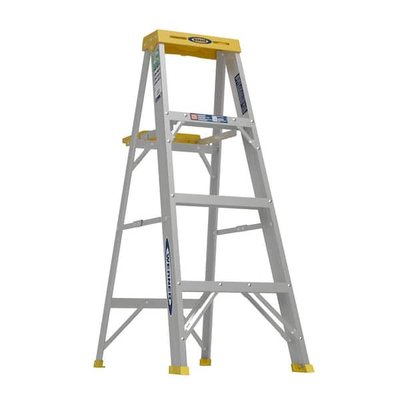
I’ve been up ladders most days for over twenty years. I’m trained, I’ve got the right kit, I know what I’m doing — and I still won’t let my wife or kids near one for cleaning the upstairs windows.
Ladder falls are the biggest cause of serious DIY injuries in the UK every year. The NHS sees thousands of them. Most happen on perfectly ordinary days, on perfectly ordinary ladders, to perfectly ordinary people who thought it would only take five minutes.
The good news is that you don’t actually need to go up a ladder to clean a two-storey house. With the right kit, you can do the whole lot from the ground, and in many cases do a better job than you would from the top of a ladder wobbling about.
The tool you need: a telescopic pole
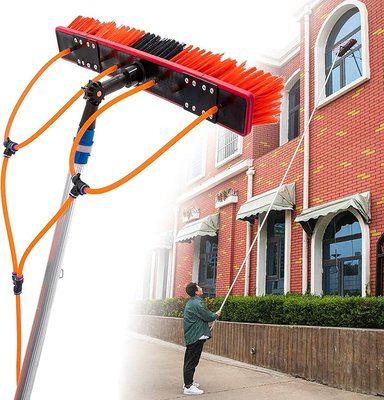
A telescopic pole (sometimes called an extension pole or a waterfed pole, depending on the type) is a long lightweight pole that extends to reach upper windows. You attach a squeegee, washer or microfibre head to the end and clean from the ground.
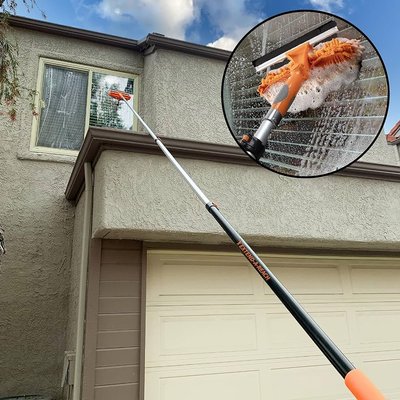
For a typical two-storey UK house you want a pole that extends to at least 6 metres. 8 metres is better if you’ve got high eaves or a dormer. Pay a bit more for a rigid carbon fibre or aluminium pole rather than the flimsy telescopic mops you see in supermarkets — those whip about at full extension and you’ll hate using them.
Two ways to do it
There are two basic approaches for cleaning upstairs windows from the ground. Pick the one that suits your situation.
Option 1: Dry microfibre pad on a pole
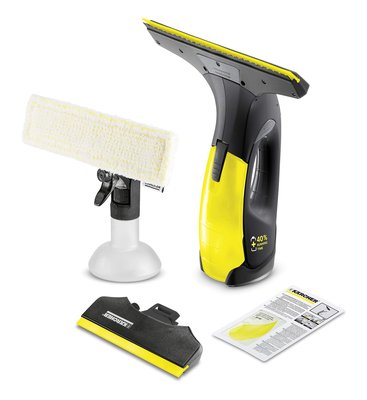
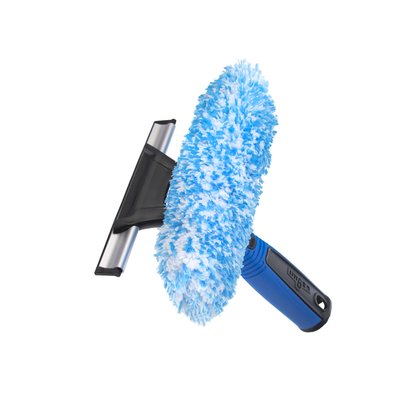
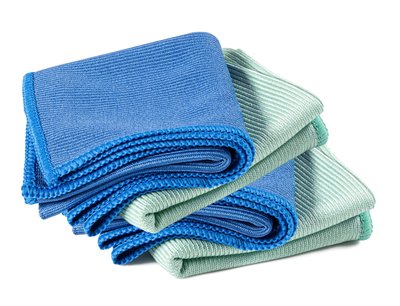
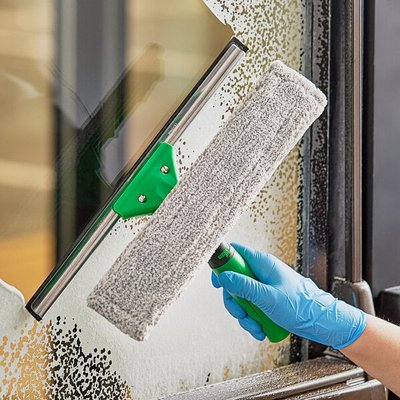
Simple and cheap. You attach a microfibre pad to the end of the pole, spray the glass with a cleaning solution (you can use a garden pump sprayer or a pre-mixed window spray), and wipe with the pad. Then either buff off with a second dry pad on the pole, or let it air dry.
This works best on windows that aren’t too dirty. Light dust, a bit of pollen, general grime — all fine. Heavy bird droppings or stuck-on muck will need more work.
Option 2: Waterfed pole
This is what the professionals use. A waterfed pole has a brush on the end and water flows through the pole to the brush. The water is purified (either through a tank system in a van or a portable filter at home) so it dries completely clear with no streaks.
You scrub the glass with the brush, rinse it with the same pole, and walk away. The water evaporates clean.
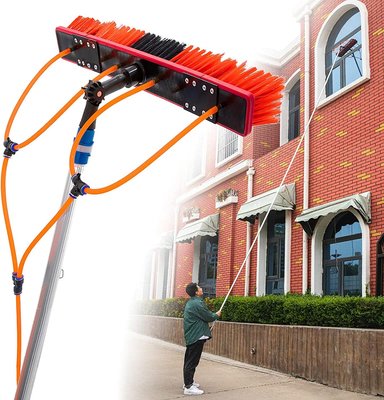
Home-use waterfed pole kits have become much more affordable in the last few years. You can pick up a basic kit with a resin filter for under £150 and clean all the windows in a semi without ever touching a ladder.
Getting the technique right
Using a long pole on glass takes a bit of practice. Here’s how to make it work:
Start close. Clean what you can reach from the ground level first. Don’t try to do everything at full extension straight away.
Brace the pole against your hip. Don’t try to hold it out at arm’s length. Tuck the bottom end against your hip or thigh and use your other hand further up the pole to guide it. Much steadier.
Move your feet. If you need to clean a different part of the window, move your body rather than trying to wave the pole across. You’ll have much more control.
Work top to bottom. Always start at the top of the window and work your way down. Water and dirt both fall, so if you do the bottom first you’ll be re-dirtying your work.
Mind the wind. On a windy day, a long pole at full extension is a liability. It pulls you off balance and the water blows everywhere. Wait for a calm day.
Safety points nobody mentions
A few things to keep you safe even without a ladder:
Watch for overhead wires. Telephone cables and power lines run near houses. Never use an aluminium or carbon fibre pole near overhead electrical cables — if you make contact with a live line, it can kill. Look up before you start.
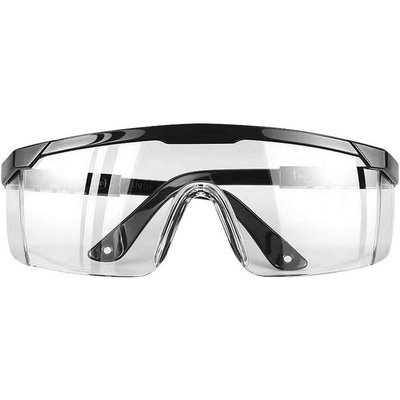
Wear eye protection. Water and cleaning solution run down the pole and drip from the brush. If it drips in your eye while you’re craning your neck upwards, it stings. Cheap safety glasses solve the problem.
Wear shoes with grip. If you’re working on wet paving with water running everywhere, the last thing you want is smooth-soled trainers.
Don’t lock your arms or your back. Controlling a long pole uses muscles you don’t normally use. Take breaks. If you start aching, stop.
What about really high windows?
Some houses have third storey windows, dormer windows, or windows in hard to reach gables. An 8 metre pole will get most of them. For anything higher, or for windows directly above conservatory roofs or flat roofs, please just call a professional.
We’ve got poles that extend to 22 metres, and for properties that need it, we use proper access equipment. It’s cheaper to pay someone a fair price than to hurt yourself trying to save £50.
Is it really as good as ladder cleaning?
In almost all cases, yes. A waterfed pole with pure water gives a better finish than a ladder and squeegee — the glass dries spot free, there are no smudges from a cloth, and you clean the frames at the same time.
Dry pole cleaning with microfibre isn’t quite as good as a full wet clean, but for regular maintenance between deeper cleans it works well.
The honest truth
A lot of window cleaners grumble about customers switching to pole cleaning at home. I don’t. If you’re going to do your own windows, I’d much rather see you do it safely from the ground than go up a ladder.
And if you decide you’d rather spend your Saturday doing something else, you know where to find me.
Need a professional instead?
I cover Watford and all the surrounding areas. I’ve got proper pure water systems, the kit for any height of property, and over 20 years of experience. Get in touch for a free quote and save yourself the effort.